

Why the lowest leg comes first
Raise what is lowest first. Then your whole Table can rise.
Find the lowest
First, see which leg needs support.
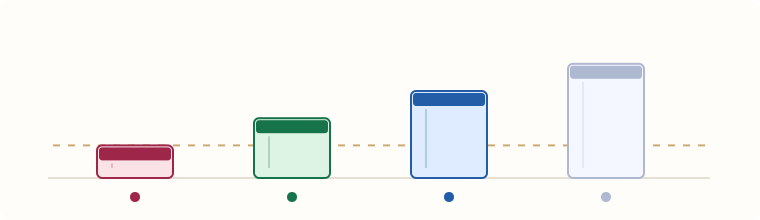
Bring it up
Bring the lowest leg level with the next.
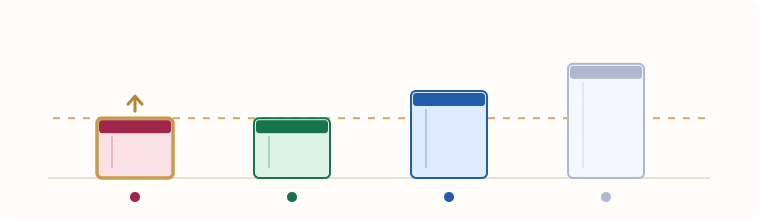
Lift the low group
Now bring the low group up together.
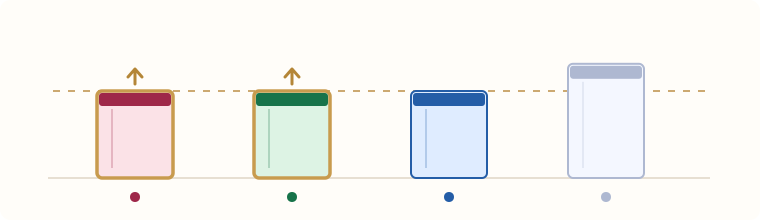
Level the Table
Bring the remaining low legs up to meet the highest.
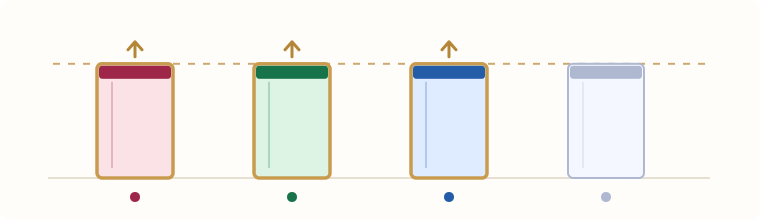
Rise together
When all four are level, they can rise as one.
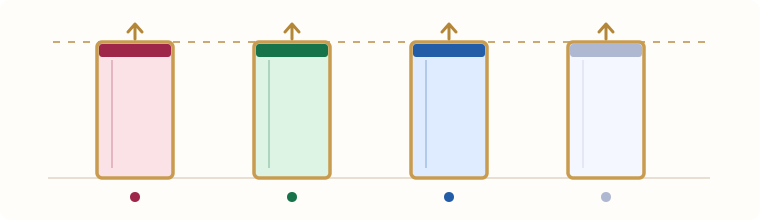
These are example heights, not a person's results. The gem colors don't tell you which part of your life comes first.
Read more about how the Table works
The four legs
- Existential Inquiry
- what you believe, how you check claims, and what gives them authority
- Energetic Integrity
- your own space and boundaries: consent, and the agreements you keep
- Emotional Integration
- feeling what you feel without pushing it onto others, collapsing, or attacking
- Physical Mastery
- your body and daily life: food, sleep, money, home, work, and following through
Each leg's height shows the lowest level your answers support in that part of your life. It is not a measure of how much you know or how hard you try. A higher leg does not make up for a lower one.
The ball on the table
Picture your whole-self wellbeing as a ball resting on the table. When there is one lowest leg, the report uses the ball’s movement toward it to illustrate the imbalance. Making a high leg higher does not lift a lower leg or bring all four level.
The order
- Start with your lowest leg. Raise it until it is level with the next-lowest.
- Raise those two together until they are level with the third.
- Raise those three together until they are level with your highest.
- Then raise all four together.
If two or more legs are already level at the bottom, work on those together. This describes the order the Table follows, not a fixed forecast. Check progress before choosing what comes next; the next check may change the order.
The Table teaches this order as the most efficient way to bring the legs level. Working on a higher leg does not, by itself, show that a lower leg has changed.
Why your strongest part is not the place to start
It is natural to put more effort where you are already strong. It can feel like progress. That does not, by itself, show a change in the part your report identifies as lowest. Sometimes your report notices answers that might point to this and asks whether it fits your experience. It is a question for you to check, not a verdict.
Your step, and when to come back
When your answers support a clear lowest leg, your report can suggest a first step. Try it in real life. Keep track of what changes and what still gets in the way.
When you have done what your step describes, come back and take the check the app offers. Finishing a task does not raise a leg by itself; your new answers do. They may keep the same focus, raise it, or point somewhere else.
What your table does not claim
Your table is a picture of your answers, not a verdict on who you are. Some heights are settled; others have been measured once or sit in a range until more answers narrow them down. Possible next levels are a guide from today's picture, not a promise about your future.
Pilot version. To return to your report, close this tab.